Garden design and construction, Brisbane west
The block decides the garden.
We work the western slopes, Kenmore out to Pullenvale, where the fall is steep, the soil runs to clay and a wet February moves a lot of water in a hurry. So we read the site first, draw it second, and build it third.
QBCC Licence 0000000 · Licensed and insured · Written fixed-price scope
Services
Seven things, mostly on the same block at once.
A garden goes in as one job, not seven quotes from seven trades. Every part below is drawn, priced and built by the same crew, which is the only reason the levels line up at the end.
Garden design
Concept, planting plan and levels, drawn around how the block actually sits and how you use the yard.
Turf supply and laying
Soft leaf buffalo where there is sun, a shade tolerant variety where the light is poor, and a prepared subgrade under either.
Retaining walls
Timber, block or concrete sleeper, sized for the height your site and your council require rather than the height that looks about right.
Irrigation
Zoned so the lawn, the beds and the pots each get what they need, on a controller you can set once and leave alone.
Paving and paths
Pavers, exposed aggregate and stepping stones, laid to a fall so the water goes where it was meant to go.
Planting and beds
Chosen for the position each plant is going into. The schedule below is where most of our lists start.
Maintenance
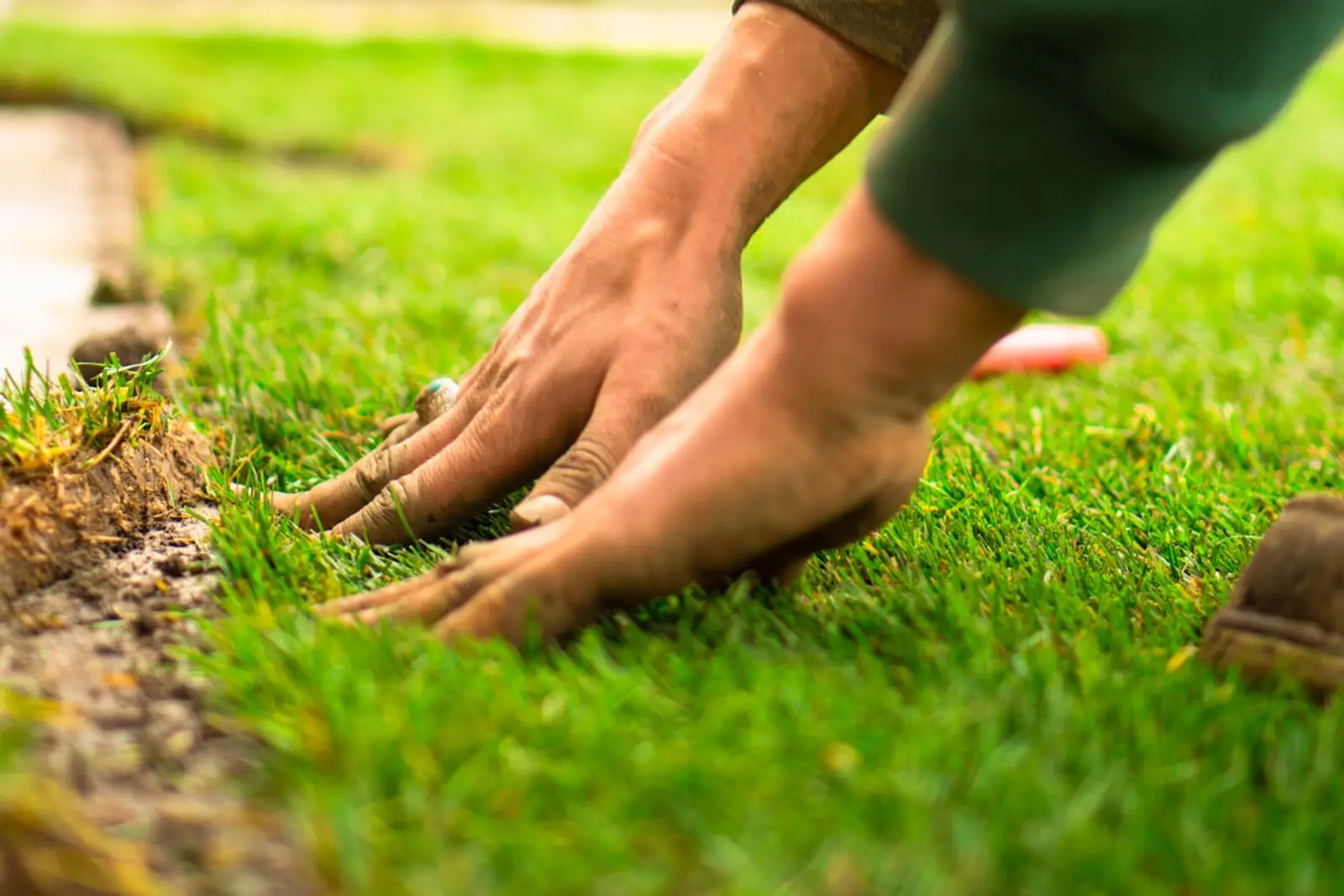
Mowing, pruning and bed care on a set round, once the garden has taken and is worth keeping.
Planting schedule
Eleven plants we keep coming back to.
A planting plan is a list before it is a picture. These are the species that hold up out here, on clay, through a wet February and a dry July. Heights are what a plant reaches in a Brisbane garden, which is not always what the label at the nursery says.
| Botanical name | Common name | Position | Mature height in a garden |
|---|---|---|---|
| Lomandra hystrix | Creek mat rush | Sun to part shade | 1.0 m |
| Dianella caerulea | Blue flax lily | Sun to part shade | 0.6 m |
| Westringia fruticosa | Coastal rosemary | Full sun | 1.5 m |
| Callistemon viminalis | Weeping bottlebrush | Full sun | 3.0 m |
| Syzygium australe | Lilly pilly | Full sun | 4.0 m |
| Cordyline fruticosa | Cordyline | Part shade | 2.5 m |
| Alcantarea imperialis | Giant bromeliad | Part shade | 1.2 m |
| Asplenium australasicum | Bird's nest fern | Shade | 1.0 m |
| Philodendron Xanadu | Xanadu | Shade to part shade | 1.0 m |
| Tristaniopsis laurina | Water gum | Full sun | 6.0 m |
| Buckinghamia celsissima | Ivory curl flower | Full sun | 7.0 m |
Bars are drawn against a seven metre scale. Mature height is a garden figure, not a nursery maximum, and it moves with soil, aspect and how often a plant gets cut. Every list is drawn for the block it belongs to, so yours will not be this one.
The garden year
No off season out here, only a right season.
Subtropical Brisbane gives you work worth doing in all twelve months. What moves is which job belongs in which month, so if you are planning ahead, this is roughly how the year falls.
In words: turf lays best from September to November and again from March to May. Planting is best from March to May, and good again from September to November. Retaining walls, paving and irrigation are best from June to August, when there is the least rain to work around. Maintenance runs all year.
Hot, humid and stormy. Turf strikes fast in the heat on the back of real rain, but wants watching for fungal patch, and dense new planting is better held a few weeks.
The rain eases while the soil is still warm. This is the best planting window of the year for natives, and turf laid now establishes on far less water.
The driest, coolest stretch, and the window we book hardscaping into. Walls, paving and irrigation with the least rain to work around and the lawn barely growing.
Beds and lawns wake up and warm fast. Peak planting months, and the last comfortable stretch to lay turf before the summer heat arrives.
Process
Four steps, and the price lands before step three.
The steps do not change through the year. The only thing that moves is the best month to start.
Site visit
We walk the block with you, take levels where the fall needs them, and talk through what you want and what is fighting it. No charge, and no pressure to book anything on the day.
Design and a fixed quote
A concept, a planting plan and an itemised written quote. You can change your mind while it is still on paper, which is the cheapest place there is to change it.
Build
Scheduled around the weather and material lead times. You will know which days we are on the block, and it gets left tidy at the end of each of them.
Handover
We walk you through what has gone in, how to water it and what needs cutting when. A maintenance round is offered, never assumed.
Service area
Brisbane's western suburbs.
Based out west and working across these suburbs and the ones next to them.
- Kenmore
- Kenmore Hills
- Chapel Hill
- Brookfield
- Pullenvale
- Fig Tree Pocket
- Indooroopilly
- Toowong
- St Lucia
- Taringa
- Mount Ommaney
- Jindalee
- Sinnamon Park
- Corinda
Not on the list? Ring anyway. If you are near the suburbs above, we most likely come to you.
Questions
Before you ring us.
The twelve we get asked most, answered properly rather than in one line.
What turf works best in Brisbane, including the shaded parts of a yard?
In full sun, a soft leaf buffalo like Sir Walter handles the heat and the humidity and stays dense underfoot. Where a lawn gets less than about four hours of direct sun, a shade tolerant buffalo holds on far better than couch, which thins out quickly once it is shaded. How the lawn gets used matters as well, so we confirm the variety against your block before anything is ordered.
When is the best time of year to lay new turf here?
Turf can go down in Brisbane almost any month, because the soil rarely drops below turf growing temperature. Spring through to autumn strikes fastest, since warm soil speeds up root growth. Winter laying works too, it just takes longer for the roots to knit in before the lawn will take normal foot traffic.
How much watering does new turf need, and what about water restrictions?
New turf wants water daily for the first week or two to keep the root zone moist while it strikes, then every second or third day once it has taken. Outdoor water use in South East Queensland sits under permanent water conservation measures set by your council or water authority, so check the current rules for your address and we will plan the laying date around them.
How long before a new garden looks established?
Turf takes light foot traffic in two to three weeks and full use at about six. Beds are slower. Small shrubs and groundcovers usually close up within one growing season, while screening hedges and specimen trees take one to three years to reach the size they were chosen for.
How do you deal with drainage on a sloping block?
It depends on the fall. Sometimes it is surface shaping to move water away from the house, sometimes subsurface agricultural drains run to a legal stormwater point, and sometimes it is a wall to hold one grade and terrace the rest. Which of those applies is worked out on site, before anything is quoted.
Do retaining walls need council approval?
In Queensland a wall over roughly one metre in height generally needs building approval, and some councils add their own rules on top, for example near a boundary or where a wall supports a driveway. It varies by council and by site, so confirm the current requirement with your local council or a building certifier before a wall over that height goes in.
Should I plant natives or exotics?
Natives suited to South East Queensland are generally lower maintenance once established, because they are adapted to the rainfall pattern and the soil, and they bring birds in with them. Exotics give flowering, form and screening that natives do not always match. Most gardens out here end up a mix, chosen position by position rather than by one rule for the whole yard.
Do you maintain the gardens you build?
Yes, on a regular round after handover, covering mowing, pruning, bed care and general upkeep. It is not compulsory. Plenty of owners would rather look after it themselves once it has taken, and that is a fine outcome too.
What does a garden design cost?
It depends on the size of the block and how much of it is being redrawn, from a single bed through to a full front and back concept. The design fee is confirmed after the first site visit, once the scope is clear, and it is separate from the cost of building the garden.
Is the work priced as a fixed quote or by the hour?
Most jobs are a fixed quote against a scope agreed after the site visit, covering the materials and the labour for the work described. Ongoing maintenance is the exception. That is priced per visit or on a regular round, because it is open ended by nature.
How long does a garden build take from start to finish?
A straightforward turf and planting job can be done in a day or two. A build with retaining walls, paving and irrigation usually runs from one week to several, depending on the scope, the weather and how much of the old yard has to come out first. The timeframe is confirmed as part of the quote.
Do you supply the plants and the materials?
Yes. Turf, plants, pavers, timber, soil and the rest are supplied and quoted as part of the job. If you would rather source something specific yourself, a particular feature plant or a pot you have already found, that is easy enough to work into the plan and the quote is adjusted for it.
Get in touch
Tell us about the block.
A few lines is plenty to start with. If it is easier said out loud, ring us instead and we will talk it through.