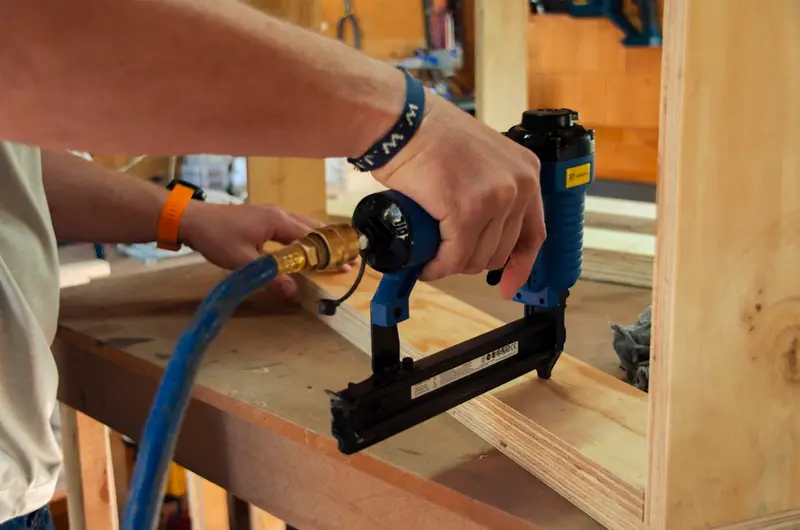
Decks and pergolas
Ground-level decks through to elevated, engineered structures, designed around where the shade actually falls on your block.
- Stock
- Merbau or spotted gum
- Fixing
- Stainless, screw-fixed
- Finish
- Penetrating deck oil
Carpentry, decks and timber floors
Decks, pergolas, timber flooring and fitted joinery across Brisbane's northside. Every job is measured on site and written up as a fixed price before a board leaves the rack.
The rule of the job
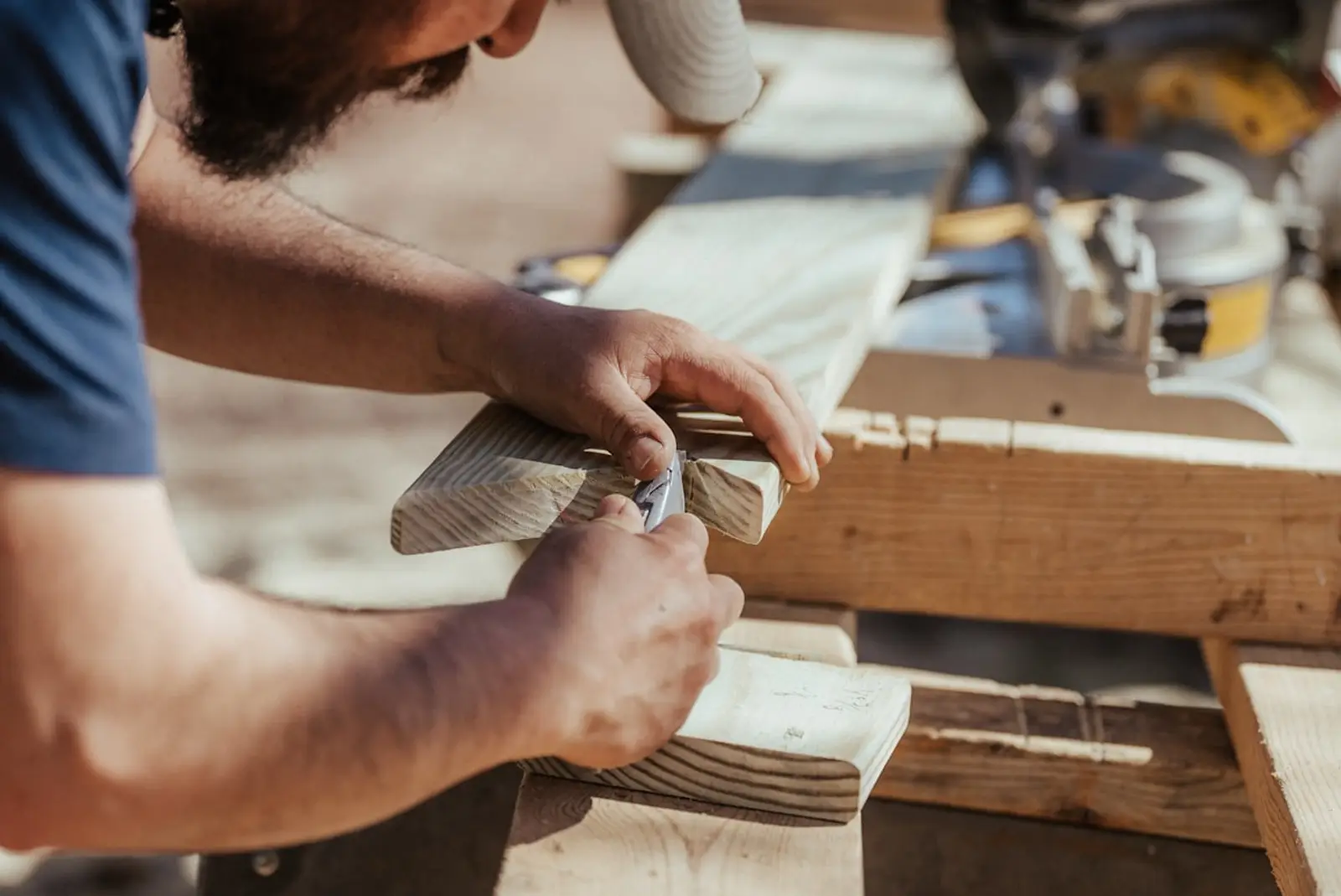
A board cut short cannot be lengthened.
Timber does not forgive guesswork. A joist set out five millimetres off shows in every row of decking above it, and a floor laid in a hurry announces itself for the next thirty years. So the order never changes here: look at the site, take the measurements, write the price down, then start.
What follows is the shape of the work. What we build and what it is built from, how a job runs from the first phone call to the walk-through, and the suburbs we cover. Nothing on this page is a claim we cannot stand behind on site.
Six kinds of job, each measured on site and quoted in writing before any timber is cut. The stock and the finish for each one is set out beside it.
Ground-level decks through to elevated, engineered structures, designed around where the shade actually falls on your block.
Solid and engineered boards supplied and laid, plus sanding and refinishing for the floors already in the house.
Bookshelves, wardrobes, window seats and storage, built on site to fit the room you have rather than a room a factory assumed.
New openings cut and framed during a renovation, or a tired unit swapped out of its existing frame. Fitted square, sealed, finished.
Structural and finish carpentry through an extension or a renovation, as the lead trade or working alongside your builder.
Board replacement, re-fixing, a sand back and fresh oil, for a weathered deck whose framing underneath is still sound.
Four stages, every time. The one most people are really asking about is the third.
Tell us what you are after. A few photos of the space let us scope it early and turn up with the right questions.
A real visit and a real measurement, then a written quote covering materials, labour, timeframe and any certifier cost.
Accept the quote and you get a firm start date. The timber is ordered against that date, not against a maybe.
We finish, clear the site, and walk the job with you before we leave it with you.
Brisbane's northside and the suburbs around it. The run north is short, so jobs are often booked in the same week as a neighbouring street.
If your suburb sits just outside the list it is still worth a call. Tell us the address and we will say yes or no on the phone rather than book a visit we cannot justify.
The ones that come up on site often enough to be worth writing down.
In Queensland a deck generally needs building approval once any part of it sits more than a metre above the ground, and approval can be required regardless of height depending on your block, its easements, boundaries or a heritage overlay. The rule turns on your specific site, so confirm it with Brisbane City Council or a private building certifier before work starts. We can point you at the right first step.
Hardwood is denser, takes knocks better and lasts longer outdoors, but it costs more and needs oiling to hold its colour. Treated pine is cheaper and easier to work, and it performs well when it is sealed and maintained. The right answer depends on your budget, the look you want, and how much upkeep you are happy to do.
A standard deck usually runs one to two weeks from the first day on site to handover, depending on size, ground conditions and weather. Multi-level decks, or anything high enough to need engineering, take longer. You get a realistic timeframe once we have seen the site and settled the design.
Where building approval is needed we can prepare the drawings and lodge the application through a private building certifier for you, or work alongside one you have already engaged. You are kept in the loop at each stage, and nothing is built until the approval is in place.
Most decks here need re-oiling every 6 to 12 months, because Brisbane's UV and humidity are hard on exposed timber. A deck in full sun needs it more often than a shaded one. Keeping up with the oil is the single biggest thing you can do to extend a deck's life.
Yes. Termites are active right across Brisbane and they will find untreated or badly detailed timber, particularly where it sits close to the ground or hard against the house. Termite-resistant species or treated timber, clearance from soil contact, and an annual pest inspection are the standard ways to manage the risk.
Materials, labour, the expected timeframe, and any council or certifier costs that apply. It also sets out what is not included, such as removing old decking or reinstating the garden, so nothing turns up as a surprise once the job is underway.
Yes. Offcuts, packaging and any demolished material leave with us, and the work area is left tidy at handover. Where an old structure comes out, that clean-up is scoped into the quote up front rather than found later.
Usually, by matching species, board width and finish as closely as they can be matched. An exact match to old sun-faded timber is not always possible, so we will be straight with you about what is realistic before you commit, and can suggest a blend or a transition strip where old meets new.
Both. New openings cut and framed during a renovation, and replacements into an existing frame. Pulling an old unit out sometimes uncovers water damage or framing that is out of square, so the quote carries an allowance for that where it is likely.
Often, yes. If the posts and framing are sound, replacing worn boards, re-fixing loose sections, sanding back and re-oiling costs less than a rebuild and brings the deck back to standard. We check the framing first, because that is what decides between restoration and replacement.
Most jobs are a fixed price once the scope is settled, so you know the total before work starts. Small or open-ended repairs, where nobody knows the extent until the boards come up, may be hourly, and that is always made clear on the quote before you accept it.
Tell us the job and the suburb. We will come back with a time to measure and a written price, and there is no charge for either.
Rather talk it through first? Call 0400 000 000 and describe the space. Most jobs can be roughly scoped over the phone before anyone drives anywhere.
Licensed and insured. QBCC Licence 0000000, ABN 00 000 000 000.