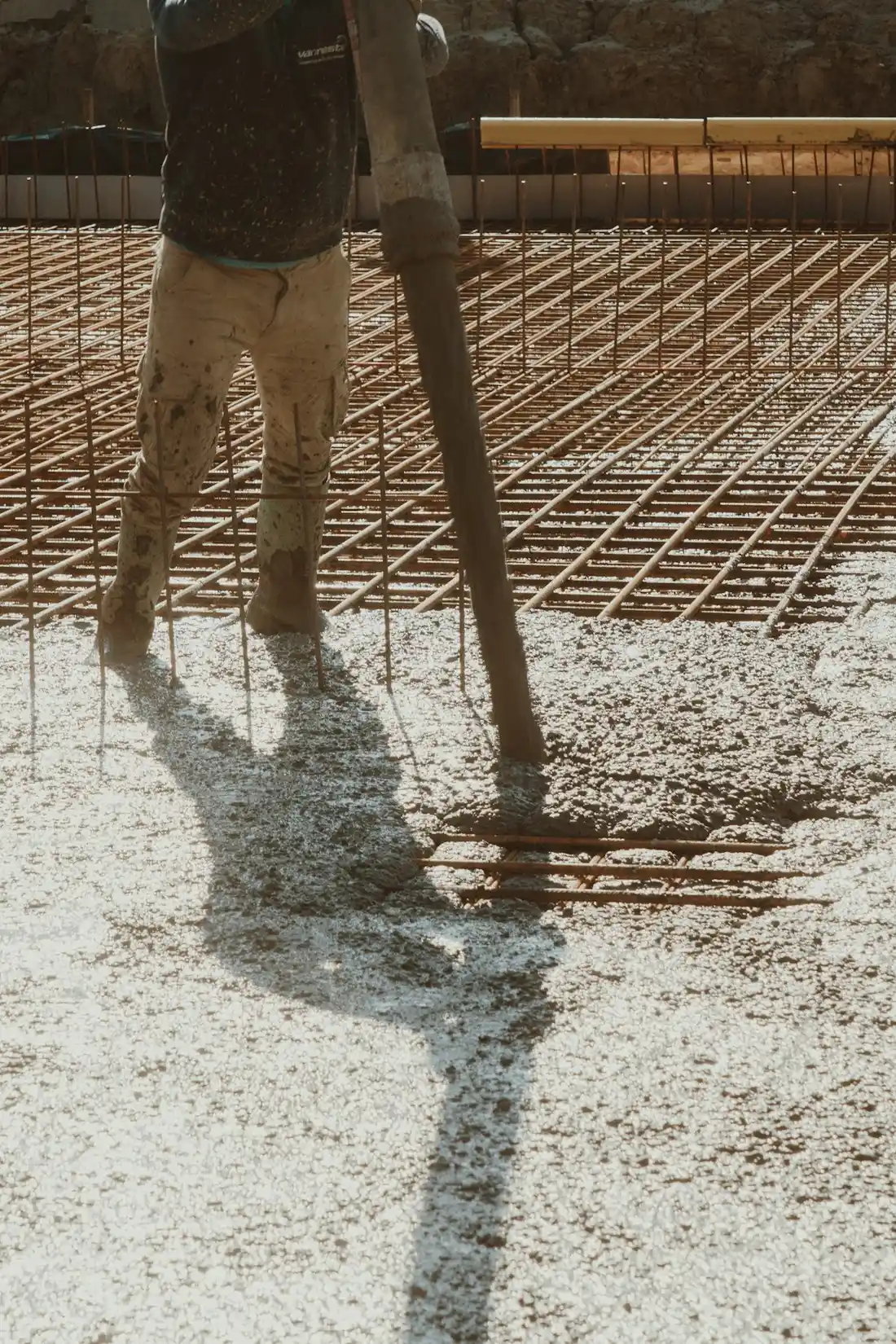
Concreting, Brisbane west
Concrete that stays flat.
Driveways, shed pads, house slabs, exposed aggregate and paths across Brisbane's western suburbs. Prepared, poured and finished by one crew, then left to cure on concrete's clock rather than ours.
- Licence
- QBCC 0000000
- Area
- Brisbane west and Ipswich
- Finishes
- Broom, exposed, stencil
- Quotes
- Free, onsite
The cure clock
Concrete keeps working after we drive away.
This is the part of the job you own. Every date below is the general rule; we give you the real one for your slab before we leave site.
-
Day0
Poured and finished
Placed, screeded and finished the same day it starts, then covered if rain is coming.
-
Day1-2
Foot traffic
The surface has firmed up enough to walk on. Nothing heavier yet, and keep the sprinklers off it.
-
Day7
Cars and trailers
A driveway generally takes vehicle weight from about a week, longer in cool or wet weather.
-
Day28
Full design strength
The benchmark concrete is tested against. Heavy loads wait until then.
Section through a driveway
Most of a slab is the part you never see.
Two quotes for the same driveway can be a thousand dollars apart and the difference is all below the surface. Pick a layer to see what it does.
A residential driveway is five layers, and only the top three millimetres of it ever gets looked at.
What we pour
Seven jobs, one crew, one truck booking.
-
Driveways
Plain, broomed or exposed aggregate, poured to carry daily traffic and finished to suit the house.
-
Shed and house slabs
Engineered slabs for sheds, granny flats and new builds, prepared and reinforced for the load they have to hold.
-
Exposed aggregate
Textured, non-slip finishes for driveways, alfresco areas and pool surrounds. The stones in the mix, washed back and sealed.
-
Patios and paths
Outdoor entertaining slabs and garden paths, shaped and finished to suit the rest of the block.
-
Decorative and stencilled
Coloured, patterned and stencilled finishes that read like pavers or stone for a fraction of the cost.
-
Cutting and removal
Cutting out old or damaged concrete, and clean joint cutting on new pours.
-
Retaining walls
Concrete retaining walls for sloped blocks, holding back gardens and levelling out a yard.
Where we pour
Brisbane west, Ipswich, and the blocks in between.
Close enough that the truck arrives on time and we can get back the next morning to check the slab.
- Ipswich
- Springfield
- Kenmore
- Karana Downs
- Mount Crosby
- Moggill
- Brookfield
- Anstead
- Chapel Hill
- Fig Tree Pocket
- Jindalee
- Sinnamon Park
- Middle Park
- Riverhills
Asked on site
Questions we get standing in the driveway.
How long before I can drive on a new driveway?
Fresh concrete needs to firm up before it takes vehicle weight. Foot traffic is usually fine after a couple of days, but keep cars, caravans and trailers off a new driveway for at least a week, and longer in cool or wet weather. We give you the date for your slab based on the mix and the conditions on the day.
Why does concrete crack, and which cracks actually matter?
Concrete shrinks a little as it cures, so hairline cracking inside a control joint, the grooves cut into the slab, is part of the process rather than a defect. What matters is a crack that runs across a joint, opens wider than a few millimetres, or has one side sitting higher than the other. Those point to ground movement or drainage and are worth a look.
What is the difference between exposed aggregate and plain concrete?
Plain concrete is finished smooth or lightly broomed. Exposed aggregate has the top layer washed back after the pour so the stones in the mix show through, which gives a textured, non-slip surface. It costs more because of the extra finishing work, and it hides tyre marks and stains better.
How thick does a slab need to be?
It depends on what sits on it. A residential driveway is poured thicker than a garden path, and a shed or house slab is engineered to the load it carries and the soil under it. We work that out at the quote rather than over the phone, because soil type and intended use both change the answer.
What is the difference between curing time and full strength?
Curing is the early stretch, roughly the first week, where the surface firms up enough for light use. Full strength takes about 28 days, which is the benchmark concrete is tested against. You can generally use the area well before then, but heavy loads wait until we give the all clear.
Do you do the excavation and formwork, or just the pour?
We do the whole job: excavation, base preparation, formwork, which is the timber or steel edging that shapes the slab, reinforcement, the pour and the finish. You do not need to line up separate trades for the groundwork.
How do you plan pours around the Brisbane storm season?
Concrete needs a dry window to be placed and finished. From November to April a downpour can arrive at short notice, so we watch the forecast in the lead-up and reschedule rather than pour into rain. Once it is down we cover and protect the slab if more rain is coming while it cures.
Do you seal concrete, and how often does it need doing again?
Sealing is optional and we recommend it for exposed aggregate and decorative finishes, because it resists stains, oil and weathering. A sealed surface usually wants a fresh coat every couple of years, depending on sun and traffic. A driveway wears faster than a sheltered patio.
Do you use steel mesh or fibre reinforcement?
Most residential slabs use one, the other, or both. Mesh sits inside the pour to control cracking and carry load, and fibre is mixed through the concrete itself. We recommend the right approach for your slab based on its size and what it has to support.
Can you remove and replace old concrete?
Yes. We cut out and remove cracked or damaged concrete and prepare the base for a new pour. Cutting is also how we put clean control joints into a new slab, or separate a driveway from an existing footpath without disturbing it.
Do you handle council approvals and stormwater crossovers?
A driveway crossover, anything connecting to council stormwater, and anything affecting the road reserve usually needs council sign off, and plumbing work needs a licensed plumber. We handle the concreting side and coordinate with council and the other trades. Mention it at the quote so it is scoped in from the start.
How far ahead do you book, and how long does a pour take?
Most residential jobs are booked a couple of weeks ahead, because the truck, the crew and the weather all have to line up on the same morning. A standard driveway is prepared one day and poured the next. The pour finishes the day it starts, since concrete does not wait, so the crew stays until it is screeded and finished.
Get a price
Tell us what needs pouring.
Measurements, access and what the slab has to carry all move the number, so quotes are done on site and they are free. The fastest way to a price is still the phone.
Template demo. This form does not send anywhere.